Showing posts with label kids dental health. Show all posts

Monday, February 2, 2015

Preventing Tooth Decay

Preventing Tooth Decay

Tooth decay [caries, cavities] is probably the most prevalent disease, affecting almost everyone during his or her lifetime. The good news is that it isn’t life threatening and is essentially preventable. The tooth decay process starts with dental plaque [sticky mixture of bacteria, food & debris]. Bacteria [germs], which naturally live in everyone’s mouth, but thrive in plaque, utilize carbohydrates from your diet, especially refined sugar [sucrose] to produce acid. Acid, if produced frequently, will demineralize [dissolve] the tooth enamel structure, which is the hardest substance in the human body. From there the acid will continue to eat through the underlying dentin layer until the bacteria and their waste products reach the pulp [nerve]. Left untreated, tooth decay can lead to root infection and eventually loss of your tooth.
There are visible signs of a cavity. Initially, it will appear as a small white spot, which in time will turn brown. As the decay continues, a hole in the tooth may become apparent. There are also warning symptoms such as sensitivity while brushing or to hot or cold foods or to breathing in air. Of course a painful toothache is a definite sign.
Prevention
The most important prevention technique is daily removal of plaque with flossing and brushing. If possible, good oral hygiene should be practiced after every meal.
Using fluoride to strengthen the enamel and help remineralize teeth is a highly reliable prevention tool. Use only a fluoride, ADA recommended toothpaste. At our office, we give topical fluoride treatment to children up to age 18. We can also fabricate custom trays to be used at home with a gel fluoride for adults who have rampant caries or who are more predisposed to having tooth decay. We also recommend fluoride drops or vitamins for infants who don’t live where the public water supply is fluoridated. Call our office to see if your water is fluoridated. Diet is significant in caries prevention. . Studies have shown that the nature and frequency of sugar intake is more important that the amount. If the sugary food is very sticky like caramel, gummy bears or jam, it will remain on the teeth for a longer period of time. If you or your children are constantly snacking on sugary foods, there is a continuous acid attack on your teeth. What do we do to prevent this potential problem? Avoid having sugar in your mouth for long periods of time. Stay away from sucking candies and chewing gum [unless sugarless] and refrain from drinking soda pop regularly [unless diet]. Try to cut down on the number of snacks per day. If you must snack, substitute foods that most like but don’t promote tooth decay. Examples are popcorn, pretzels, fruits, nuts, cheese, pizza and vegetables. Consuming sugary foods with a meal or for dessert has a less detrimental effect, because increased salivary flow during meals helps to wash the food away. Also, it is usually nearer the time that most people will brush their teeth. Keeping this in mind, it is better for children to eat sweets at a time and place that allows them to brush soon afterwards. As your children are growing, make sure they get plenty of calcium [dairy products] so that their tooth enamel develops properly. Finally, because you may be asymptomatic and unaware of the beginning of tooth decay, it is critical that you visit our office every 6 months for a check-up. Some cavities are hard to detect, especially those between the teeth. Sometimes, only bitewing x-rays can discover them. We will also give you a professional prophylaxis [cleaning], which is an important part of prevention.
 

Tuesday, December 30, 2014

Setting Priorities for Good Dental Health

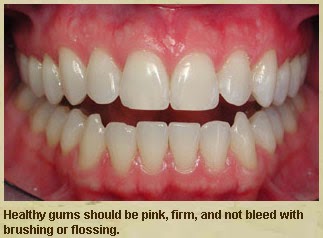
Many people have bleeding gums, and they don’t think twice about it. They view it as a minor inconvenience. If you were bleeding from any other part of your body, you wouldn’t hesitate to see a physician. If you lost a body part you wouldn’t hesitate to have it replaced. We have 32 teeth - they are all body parts.


While we may not need our teeth to live like one needs a heart, we need our mouth to be pain-free and functional to enjoy a good quality of life.
This is our passion. Make it yours and the rest will fall into place. Call and ask us how we may help you achieve your oral hygiene and health goals and ensure a greater quality of life.

But like exercising, dieting or anything that requires a routine, many of us fall short of a sustained effort to accomplishing long-term results. Why do we run out of toothpaste, floss, toothbrushes vitamins, etc. when we know their importance? Why do we have problems maintaining an oral hygiene regimen? Perhaps, we don’t make the answers priorities.
Call (757) 229-1224 today to schedule an appointment with one of our hygienists.

Tuesday, December 16, 2014

Give the Gift of Whitening!

Whitening Your Smile

How we look and how we perceive ourselves has much to do with our self-esteem. When the color of our teeth makes us embarrassed to smile, it’s probably time to get our teeth whitened [bleached].

As one ages, teeth may darken from coffee, tea, smoking, berries and other substances that get into microcracks in the enamel causing discoloration. Some people have gray or brown bands on their teeth caused by an early childhood fever or tetracycline medication taken when the tooth enamel was forming. In some parts of the country where fluoride is found in natural high concentrations in the drinking water, individuals have developed teeth with bright white patches or dark brown blotches [mottled enamel or fluorosis]. 

Everyone is not a candidate for bleaching. Teeth discolored from aging have the best results. If you have tooth colored resin or composite fillings in your front teeth, they will not change color from bleaching and will “stick out like a sore thumb” after the procedure. If you would like to have your teeth whitened, call it to our attention at your next check-up visit. If you are not a good candidate, we can suggest alternatives such as bonding or porcelain veneers. 

There are various options to whitening your teeth. Bleaching can be an in-office procedure [chairside]. It may involve several appointments of 30-60 minutes each. The bleaching agent is applied to your teeth and activated with a special light. There is also an at-home procedure wherein you will wear a custom-made mouthguard, filled with a bleaching gel, as per instructions from your dentist. Some toothpastes have added whitening agents and can be used as an adjunct to the other two procedures. In any case, there is no reason to ever again suffer the embarrassment of discolored teeth.
 This is the Best Holiday gift idea!  Call our office today to get your friend or family members Whitening Gift Certificate. 

Tuesday, December 2, 2014

Carbonated Beverages are Bubble Trouble

The single biggest source of calories [7%] in the American diet is from carbonated soft drinks. A carbonated beverage is one that releases carbon dioxide in normal atmospheric pressure. Artificial carbonation was first introduced in 1767 and after 1830, the sweetened and flavored lemon-lime, grape and orange carbonated drinks became very popular. Today, heavily sweetened, carbonated drinks or sodas are among the most popular beverages in the world. Consumption of carbonated soft drinks peaked in 1998 when consumption was 56.1 gallons per person per year. Soft drinks provide large amounts of sugar [mostly high-fructose corn syrup] to many individual's diets. The empty calories of soft drinks contribute to health problems, particularly obesity and tooth decay [caries]. A study from Harvard shows that soft drinks may be responsible for the doubling of obesity in children over the last 15 years.


Carbonated soft drinks not only have a high sugar content that contributes to tooth decay but also have a very acidic pH that can erode tooth enamel. Some of these drinks, especially the colas have as much caffeine as a cup of coffee and can disrupt children's or adult's sleep and leave them feeling tired during the day.
These carbonated soft drinks are also related to gastric distension, which can trigger reflux. Studies show the consumption of one can of soda a day corresponds to 53.5 minutes of elevated acid levels in the stomach.


The best approach is to cut down or avoid carbonated drinks. Many schools have removed the soft drink vending machines in their halls and cafeterias. If not, it's best to drink through a straw so the soda is swallowed from the back of the mouth and does not come in contact with the teeth causing decay. Substitute other beverages such as water and more nutritious beverages like milk and juices.

Friday, April 11, 2014

6 Easy Ways to Prevent Cavities in Kids

Kids and cavities seem to go hand in hand. According to the Centers for Disease Control and Prevention, 28 percent of children ages 2 through 5 have at least one dental cavity, compared to 24 percent a decade ago. Although 4 percent may not seem like a lot, that increase represents thousands and thousands of children and cavities -- as well as a trend in the opposite direction of the last 40 years, when tooth decay was on a gradual decline. So if you have children and cavities are a concern, here are six easy ways to reduce the risk:

1. Avoid giving your baby juice or formula at night. The sugar in juice and formula causes the bacteria in the mouth to produce the acids that cause baby bottle tooth decay. Use fluoridated water instead.

2. Choose low-fat foods from the basic food groups. Raw fruits and vegetables, nuts, whole-grain breads and low-fat dairy products are great for your child's overall health and their dental health!

3. If you must, give sweets only as a dessert. If your child must have sweets, limit it to dessert or following a main meal. Late-night snacking and frequent snacking are a major culprit of cavities in children.

4. Invest in a water filter. Instead of spending extra on bottled water, invest in a filter for your sink, or a filtered water pitcher. Fluoridated tap water is an excellent resource to help the battle between children and cavities.

5. Don't share cups or utensils. Cavities are contagious. So if you have them, you can pass them onto your child by sharing cups and utensils.

6. If you smoke, stop. The University of Rochester's Strong Children's Research Center has discovered a link between smoking, children and cavities. Results from a study show that children of parents who smoke are more likely to develop cavities.

For more information, or to schedule a cleaning, call your favorite Williamsburg dentist, Dr. James A. Burden, at (757) 941-7079!