Monday, November 17, 2014

Preventive Dentistry: Toothbrushing

Toothbrushing is an effective way of removing plaque [sticky mixture of bacteria, food & debris] from your teeth. Daily removal of plaque can prevent tooth decay and periodontal [gum] disease. Select a toothbrush that will provide easy access to all areas of your mouth; this includes one with a small head [1 inch by ½ inch] and a flexible head or handle. The brush should have soft nylon bristles with round heads and a wide handle for a firm grip. There are also a variety of electric or sonic brushes that work well. Call our office for a recommendation.


Establishing a daily pattern and a consistent approach to your brushing technique is important to ensure that you have accomplished adequate cleaning. One easy technique involves placing the toothbrush at a 45° angle to your teeth and gently brushing in an elliptical motion. Start on the same quadrant [same side, lower or upper] each time. Brush the outside of the teeth, the inside and the biting surface. Repeat this action with the other three quadrants. When you are finished, brush you tongue. Adequate brushing should take 3-4 minutes.


There are other effective brushing methods that may be appropriate for you, depending on the condition of your teeth and gums. Bring your brush to your next check-up visit and have our hygienist review your technique.
Toothbrushing is most effective if done right after eating. It would be a wise idea to keep an extra brush at work for after lunch or snacks. Toothpaste is not necessary if you are using fluoride toothpaste at home 1-2 times a day. Just rinse with water when you are finished.
Effective toothbrushing starts with habit and routine and ends with time, diligence and good technique.


Wednesday, November 5, 2014

What Are Dental Implants?

Dental implants offer people an alternative to the traditional ways of replacing missing teeth. The actual implant is an artificial root [anchor] made from synthetic material, usually titanium metal. There are three phases to the implant process.


First, the dental implant is surgically placed into the jawbone. It takes 3-6 months to fuse with the bone [called osseointegration]. An abutment [post] is attached to the implant and protrudes above the gum tissue. A replacement restoration is cemented or screwed to the implant abutment. Depending on the situation, dental implants can support a fixed crown or bridge or act as a stabilizing base for a full denture. The procedure can take up to 9-12 months for completion and has a high degree of success.

Some individuals have had so much bone resorption [loss] that the remaining bony ridge is too thin to hold an implant. In many cases, synthetic or natural bone can be grafted [added] or grown to allow for dental implants as an alternative treatment.

Implants have a great advantage for people already wearing full dentures since they can support and stabilize the denture while minimizing further bone loss of the denture ridge.
Not everyone is a good candidate for dental implants. There are certain risk factors that may limit success including smoking, excessive alcohol consumption, chronic bruxism [grinding teeth], systemic problems such as diabetes and individuals with poor oral hygiene.

Dental implants offer a “second chance” to those who have lost all of their teeth. For people missing only one or several teeth, dental implants provide benefits as an alternative way to restore your mouth. To determine if implants are for you, a clinical examination, x-rays, study casts and other appropriate records and measurements will be necessary. Call our office at (757) 229-1224 if you have questions or would like to schedule a complimentary consultation.

Monday, October 20, 2014

New Teeth While You Wait

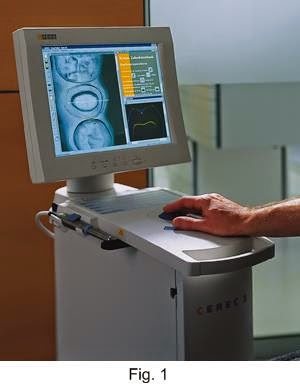
Between work and family obligations, most individuals have very hectic and tight schedules. Often dental treatment is put off because of actual or perceived time commitments on the part of a patient. This office has invested in a hi-tech system called CEREC that allows us to fabricate a permanent all ceramic crown [cap], onlay or veneer in one single office visit. This means fewer injections, less drilling and less time taken away from your daily activities. This computerized system allows us to use strong, tooth-colored ceramic materials to restore your teeth to their natural strength, beauty and function. These materials closely match the composition of natural tooth structure. The significance of this fact means when you eat hot food and drink something cold, the restoration and tooth expand and contract at almost equal rates, minimizing the chance of your tooth cracking. Also, the ceramic restorations are chemically bonded to your teeth, so we can preserve as much healthy tooth structure as possible.

First, we examine the tooth or teeth to determine the appropriate treatment. It could be a simple filling, or a full crown, depending on how much healthy tooth structure is remaining in our clinical judgment. Next, we administer an anesthetic and prepare your tooth for the restoration, removing decayed and weakened tooth tissue. This preparation is just like we would do for many other restorative techniques.
Then, we take an Optical Impression of the prepared tooth. Instead of filling a tray with impression "goop" that you must bite into and hold in your mouth until it hardens, we coat the tooth with a non-toxic, tasteless powder. A camera is used to take a digital picture of your tooth. This whole Optical Impression process only takes a minute or two.

Next, the CEREC machine helps us create the restoration for your tooth. The CEREC 3D software takes the digital picture and converts it into a 3-dimensional virtual model on the computer screen. We use our dental expertise to design the restoration using the CEREC 3D computer program. Within a few minutes, with the click of a button, the restoration design data is sent to a separate milling machine in the office. A ceramic block that matches your tooth shade is placed in the milling machine. About 10 - 20 minutes later, your all-ceramic, tooth-colored restoration is finished and ready to bond in place. Finally, we try the restoration in your mouth to ensure proper fit and bite. The restoration is then polished and bonded to the prepared tooth. Your tooth is restored with no "temporary" or return trip necessary. Please call our office to see if you are a candidate for this procedure.


Tuesday, October 7, 2014

Use it or Lose it!


Did you know that if you don't use all of your dental insurance benefits or money in your flexible spending account (FSA) this year, you lose them forever? That's right - no dental benefit plan or FSA we know of allows you to carry unused benefits over to the following year. If you don't use them, you lose them!

You may have benefits remaining this year. Waiting until next year means that not only will you lose any unused benefits for this year, but also that you may have to first satisfy a new year's deductible before any benefits will be paid.

If you have been postponing dental treatment, call our office at (757) 229-1224 to see if you have benefits remaining this year. We also have various financing options to help with any portion not covered by dental insurance.


Tuesday, September 23, 2014

A beautiful Smile is Precious and Priceless

Did you know that the shape, shade, length and spacing of your teeth could significantly affect your smile? And our smiles can greatly affect our self-esteem and confidence. Common conditions that impact negatively on your smile include broken, cracked or worn teeth, discolored teeth, missing teeth, crooked teeth, decayed teeth, gaps between your teeth and/or "gummy smiles." The good news is that with modern technology and improved materials, these situations can be dramatically changed to create natural looking and long-lasting beautiful smiles. Each patient and each specific circumstance must be evaluated on its own merits. Factors such as occlusion [bite], oral habits, available space, health of the gum tissue, severity of the problem and patient expectation must be taken into consideration while planning your cosmetic makeover. Depending on the situation, there are a variety of choices that all result in excellent esthetic outcomes. For whiter natural teeth, in-office or at-home bleaching [whitening] techniques are available. Repairing teeth or closing spaces may be accomplished with tooth-colored composite resin bonding, porcelain veneers or porcelain crowns. These procedures vary in time and cost and have differences in longevity and appearance. If you're not satisfied with your smile or want to learn if you're a good candidate for any of these remarkable techniques, call our office for a cosmetic consultation at (757) 229-1224 or visit our website at www.SmilesOfWilliamsburg.com.

Monday, September 8, 2014

Help! I Broke my Tooth!

Almost every day we get a call from a patient who has broken a tooth, and generally it means that to save the tooth, we have to place a crown or permanent restoration over it to keep it from breaking further. Sometimes the tooth can't be saved and that is a real bummer!
What causes teeth to break? Well, there are several factors, one of which we see in almost all tooth fractures. The most common contributing factor is Silver amalgam fillings- these fillings have the unique property of enlarging as they age. So, there seems to be some outward pressure on the tooth and if someone bites just the right (or wrong) way, you hear that crack!
Now this tooth broke in several planes at once, and had to be removed; there wasn't enough sound tooth structure to save it! So an implant or bridge needed to be done.
This is a more common sort of fracture. The inside aspect of the tooth just shears away. Luckily, this tooth can be saved with a crown, after first making sure there is no decay present.
The second common factor is bruxism- the habit of grinding or clenching the teeth. Many bruxers break teeth that don't even have fillings in them, but they always have a higher percentage of broken teeth than people who don't brux or clench.
If you or someone you know does grind their teeth and are worried about a tooth or some teeth, don't hesitate to give us a call and we will be glad to check it out for you! Don't wait until it hurts!

For more information, or to schedule a cleaning, call your favorite Williamsburg dentist, Dr. James A. Burden, at (757) 941-7079!

Thursday, August 7, 2014

Handling Dental Emergencies

Dental emergencies may be categorized as toothaches, injuries or broken appliances.

Toothache If a toothache develops, using a brush and floss, clean the suspected area. Rinse with warm salt water. Do not place an aspirin on the gums or tooth [this may cause a burn]. Apply a cold compress to any facial swelling. Take acetaminophen [Tylenol] and call us as soon as possible.
Avulsed Tooth If a permanent tooth is knocked completely out, time is of the essence. Immediately call us for an emergency appointment. It is critical to get the person and their tooth to us within one half hour. This makes it possible to re-implant the tooth with a high degree of success. Find the tooth, and holding it by its crown, gently rinse it to remove dirt and/or debris. Do not scrub the tooth. If possible, gently place the tooth back in its socket as a means of transport. Otherwise, transport the tooth in a cup of milk, saline [salt water], or saliva [place tooth between cheek and gum, unless child is too young]. If none of these are available, use a cup of plain water.
Extruded Teeth If a tooth is pushed either inward or outward, try to reposition the tooth using light finger pressure. Do not force the tooth into its socket. Try to get the injured person to us as soon as possible. The tooth may be stabilized and held in place with a moist tissue or gauze on the way over.
Fractured Teeth First rinse your mouth with warm water to keep it clean. Immediate dental care is necessary. The treatment will depend on the severity of the fracture and could range from smoothing out the chip to bonding with a resin [tooth colored] material to placing a crown [cap]. If there has been pulp [nerve] injury, root canal may be necessary at once or at a later date.
Soft Tissue Injury The tongue, lips or cheeks may be bitten, lacerated [cut] or punctured. If there is bleeding, apply firm pressure with a gauze or clean cloth. If bleeding doesn’t stop within 15 minutes, bring the person to our office or a hospital emergency room. Sutures [stitches] may be necessary. Otherwise, clean the area with warm water on a gauze or clean cloth. Apply an ice compress to the bruised or swollen area. Contact us for further instructions.

For more information, or to schedule a cleaning, call your favorite Williamsburg dentist, Dr. James A. Burden, at (757) 941-7079!